
Microsoft has released the Windows 10 KB5075912 extended security update to fix February 2026 Patch Tuesday vulnerabilities, including six zero-days, and continue rolling out replacements for expiring Secure Boot certificates.
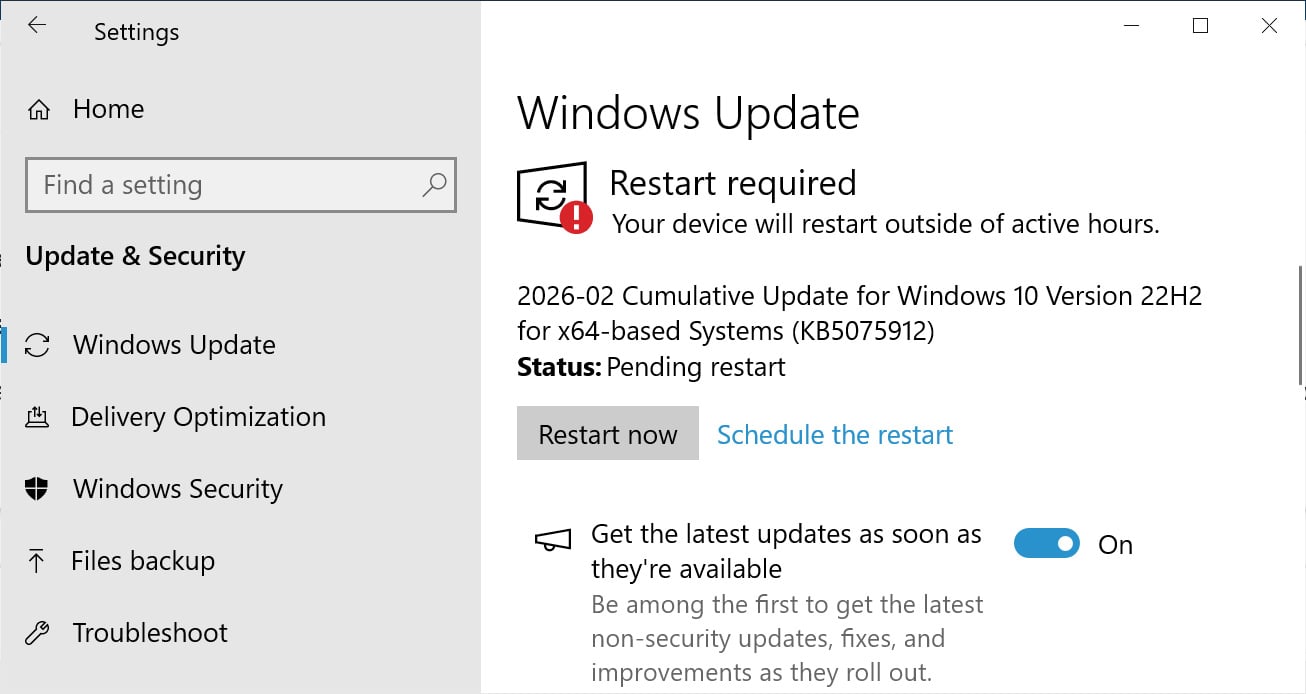
If you are running Windows 10 Enterprise LTSC or are enrolled in the ESU program, you can install this update like normal by going into Settings, clicking on Windows Update, and manually performing a ‘Check for Updates.’
Source: BleepingComputer
After installing this update, Windows 10 will be updated to build 19045.6937, and Windows 10 Enterprise LTSC 2021 will be updated to build 19044.6937.

What’s new in Windows 10 KB5075912
Microsoft is no longer releasing new features for Windows 10, and the KB5075912 update contains only security fixes and bug fixes introduced by previous security updates.
With today’s February 2026 Patch Tuesday, Microsoft has fixed 58 vulnerabilities, including six actively exploited zero-day flaws.
KB5075912 also fixes a known issue that prevented Windows 10 devices from shutting down or hibernating if System Guard Secure Launch is enabled.
The complete list of fixes is below:
- [Fonts] This update includes changes to Chinese fonts to meet GB18030-2022A compliance.
- [OS Security (known issue)] Fixed: After installing the Windows security update released on or after January 13, 2026, some Secure Launch-capable PCs with Virtual Secure Mode (VSM) enabled are unable to shut down or enter hibernation. Instead, the device restarts.
- [Folders] Fixed: This update fixes an issue that affects folder renaming with desktop.ini files in File Explorer. The LocalizedResourceName setting was ignored, so custom folder names did not show. Now, custom folder names appear as expected.
- [Graphics] Fixed: A stability issue affecting certain graphics processing units (GPUs) configurations.
- [Secure Boot] With this update, Windows quality updates include a broad set of targeting data that identifies devices and their ability to receive new Secure Boot certificates. Devices will receive the new certificates only after they show sufficient successful update signals, which helps ensure a safe and phased rollout.
Since June 2025, Microsoft has warned that multiple Windows Secure Boot certificates from 2011 are expiring in June 2026, and warned that if they are not updated, it would breach Secure Boot protections.
These certificates are used to validate Windows boot components, third-party bootloaders, and Secure Boot revocation updates, and if expired, could allow threat actors to bypass security protections.
As part of today’s update, Microsoft continues to roll out the new Secure Boot certificates to targeted systems, with updates to additional systems being installed as the targeting scope expands.
Microsoft states that there are no known issues with this update.

Modern IT infrastructure moves faster than manual workflows can handle.
In this new Tines guide, learn how your team can reduce hidden manual delays, improve reliability through automated response, and build and scale intelligent workflows on top of tools you already use.